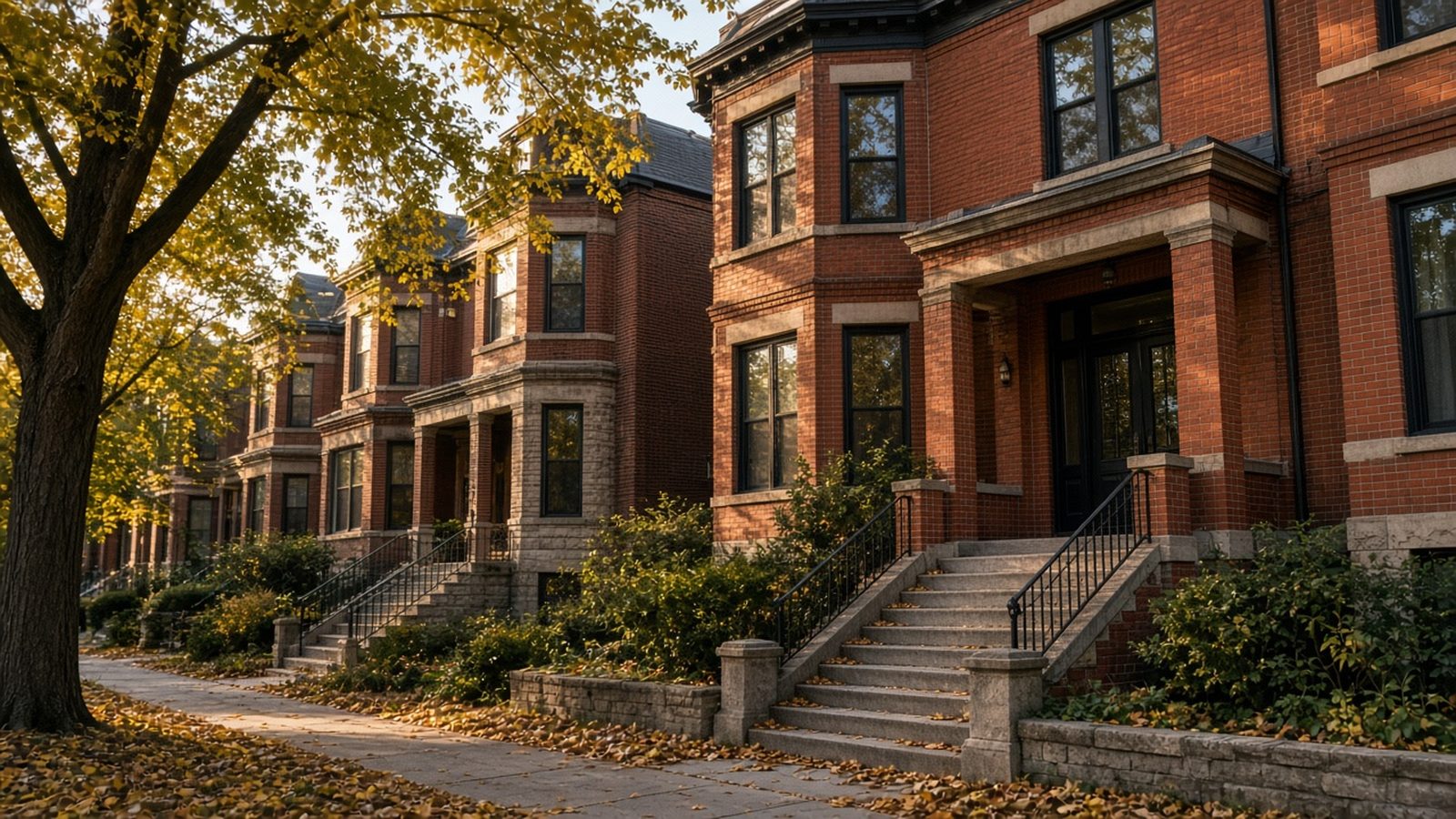
Renting in Chicago comes with a set of protections that go well beyond what Illinois state law provides on its own. The most important of these is the Chicago Residential Landlord and Tenant Ordinance, usually called the RLTO, found in Chapter 5-12 of the Chicago Municipal Code. Whether you are a tenant dealing with a broken boiler, a renter wondering when your deposit will come back, or someone who just received an eviction notice, understanding the basics of the RLTO can help you make calmer, better-informed decisions.
This guide explains who the ordinance covers, the core rights and duties it creates, how security deposits and repairs work, the notice rules that apply to rent increases and non-renewals, and what the eviction process looks like in the Circuit Court of Cook County.
Does the RLTO apply to your apartment?
The RLTO covers most residential rental units located within Chicago city limits, including many single-family homes, condominium units, and apartments. However, the ordinance contains several exclusions. Among the most commonly encountered:
- Owner-occupied buildings with six or fewer units. If the owner lives in the building and it has six or fewer units, the RLTO generally does not apply.
- Short-term hotel, motel, and rooming-house stays, unless the occupancy meets the ordinance's longer-term conditions.
- Cooperative units occupied by shareholders of the co-op.
- Certain institutional housing, such as some dormitories, shelters, and housing provided in connection with employment.
If your unit falls outside the RLTO, you are not without protection. Illinois law, including the Eviction Act and the Security Deposit Return Act (which applies to buildings with five or more units), still applies, and federal and state fair housing laws apply broadly. Because the exclusions have specific wording, it is worth reading Section 5-12-020 or asking an attorney if you are unsure.
Core rights and duties for landlords and tenants
The RLTO sets out obligations on both sides. In general terms:
- Landlords must maintain the property in compliance with the Chicago Municipal Code, keep common areas reasonably clean and safe, keep essential systems (heat, plumbing, electrical) in working order, and provide required disclosures, such as notice of certain code violations and utility arrangements.
- Tenants must pay rent on time, keep their unit reasonably clean and safe, avoid damaging the property, comply with reasonable rules, and allow reasonable access for repairs and inspections.
On access, the ordinance generally requires a landlord to give at least two days' notice before entering a unit for non-emergency reasons, and entry should be at reasonable times. Emergencies are an exception.
The RLTO also lists lease provisions that are prohibited and unenforceable (Section 5-12-140). Examples include clauses that waive tenant rights under the ordinance, confession-of-judgment clauses, waivers of a jury trial, and clauses requiring the tenant to pay the landlord's attorney's fees except as allowed by court rules, statute, or ordinance. Late fees are also capped: a landlord may not charge more than $10 per month for the first $500 of monthly rent plus 5% of any rent above $500. If a landlord tries to enforce a prohibited provision, the ordinance allows the tenant to recover two months' rent.
Security deposits: the rules landlords most often get wrong
Security deposit disputes are among the most common RLTO issues, in part because the ordinance's requirements are detailed and the penalties for noncompliance can be significant. Key points include:
- Receipt and disclosure. The landlord must provide a receipt that identifies the owner of the deposit and other required details. The lease must also identify the Illinois financial institution where the deposit is held.
- Holding the deposit. Deposits must be held in a federally insured account at a financial institution located in Illinois and generally may not be commingled with the landlord's own assets.
- Interest. For deposits held more than six months, the landlord must pay interest each year at a rate set annually by the City Comptroller. Because the rate changes every year, check the City of Chicago's official "Security Deposit Interest Rates" page for the current figure rather than relying on a number from an old lease or website.
- Return after move-out. The landlord generally must return the deposit, plus any interest owed, within 45 days after the tenant vacates, minus unpaid rent and the reasonable cost of repairing damage beyond normal wear and tear.
- Itemized statement. If the landlord intends to deduct for damage, the ordinance requires an itemized statement of damages, with estimates or receipts, within 30 days after the tenant vacates, followed by copies of paid receipts within the time the ordinance allows.
When a landlord fails to comply with certain deposit requirements, the RLTO allows the tenant to recover an amount equal to two times the security deposit plus interest, along with court costs and reasonable attorney's fees. The ordinance includes some limited cure opportunities for technical errors, so outcomes depend on the specific facts. If a building is sold, the new owner generally takes on responsibility for deposits held for existing tenants.
Practical tip: Take dated photos or video of the unit at move-in and move-out, keep your lease and receipts, and provide your forwarding address in writing.
Repairs, habitability, and heat
The RLTO gives tenants several remedies when a landlord fails to maintain a unit, but each has procedural steps that matter. For minor defects, after written notice and a 14-day opportunity to fix the problem, a tenant may in some circumstances:
- Repair and deduct: have the work done properly and deduct the cost from rent, up to the greater of $500 or one-half of the monthly rent (but never more than one month's rent), after giving the landlord a paid bill;
- Withhold a portion of rent that reasonably reflects the reduced value of the unit; or
- Sue for damages and other relief.
For major defects that make the unit not reasonably fit to live in, a tenant who gives written notice may be able to terminate the lease if the landlord does not make repairs within 14 days, and must then move out within the time the ordinance requires. The ordinance has separate remedies when a landlord fails to supply essential services such as heat, running water, hot water, electricity, gas, or plumbing.
These remedies can be powerful, but using them incorrectly can expose a tenant to an eviction case for nonpayment. Before withholding rent or deducting repair costs, many tenants find it worthwhile to speak with a lawyer or a tenant-rights organization.
Chicago also has a heat ordinance that requires landlords to supply minimum indoor temperatures during the heating season (which runs from September 15 to June 1). Check the City's current temperature requirements on chicago.gov; you can report heat problems and request a building inspection by calling 311.
Retaliation and lockouts are prohibited
The RLTO prohibits a landlord from retaliating against a tenant for good-faith actions such as complaining to a government agency about code violations, joining or organizing a tenant union, or testifying in a proceeding. Retaliation can take the form of a rent increase, decreased services, threatened eviction, or refusal to renew.
The ordinance also prohibits lockouts. A landlord may not change the locks, remove doors, shut off utilities, or remove a tenant's belongings to force the tenant out, even if rent is unpaid. The Chicago Police Department can be called about an illegal lockout, and the ordinance provides fines against the landlord as well as remedies for the tenant. The only lawful way to remove a tenant is through the court process described below.
Notice rules: rent increases, non-renewals, and terminations
Under the City's Fair Notice amendments to the RLTO, a landlord who plans to raise the rent or not renew a lease must give advance written notice based on how long the tenant has lived in the unit:
- 30 days' notice if the tenant has occupied the unit for six months or less;
- 60 days' notice if occupancy is more than six months but less than three years;
- 120 days' notice if occupancy is three years or more.
If proper notice is not given, the tenant may generally remain under the existing terms until the required notice period has passed.
For nonpayment of rent, a landlord typically begins with a five-day written notice. The RLTO gives tenants a meaningful protection here: in many cases a tenant can keep the tenancy in good standing by paying the full amount of back rent plus the landlord's court filing costs before an eviction order is entered. This right may generally be used once in any 12-month period. For lease violations other than rent, a 10-day notice is common.
How the eviction process works in Cook County
If the notice period expires without a resolution, the landlord must file an eviction case under the Illinois Eviction Act (735 ILCS 5/9-101 and following). Chicago eviction cases are heard in the Circuit Court of Cook County, First Municipal District, based at the Richard J. Daley Center, with some hearings held remotely.
- Summons and court date. The tenant receives a summons with a court date. Do not ignore it; a tenant who does not appear may lose by default.
- Free help may be available. Cook County has offered free legal aid, mediation, and rental-assistance connections through programs such as the Early Resolution Program. Check the court's and the County's websites for current availability.
- Hearing and order. A judge decides whether to enter an eviction order and, if so, typically sets a date by which the tenant must move.
- Enforcement. Only the Cook County Sheriff can carry out a court-ordered eviction. A landlord cannot do it personally.
In certain situations, Illinois law allows eviction court files to be sealed. An attorney can tell you whether this may apply to you.
Practical steps for Chicago renters
- Read your lease and the RLTO Summary that landlords are required to attach.
- Communicate about repairs and disputes in writing, and keep copies.
- Pay rent in a traceable way and keep receipts.
- Photograph the unit at move-in and move-out.
- Never ignore a notice or summons; act on deadlines promptly.
When to talk with a Chicago landlord-tenant lawyer
Consider speaking with an attorney if you have received an eviction notice or summons, if your landlord is withholding a deposit, if you are thinking about withholding rent or terminating a lease because of conditions, or if you believe you have experienced a lockout, retaliation, or discrimination. Landlords facing a difficult tenancy can also benefit from advice before serving notices, since procedural errors can delay a case.
If you would like your situation reviewed by Henry Dog, a Chicago attorney, you can share a brief, general description through our contact form. If it is not a matter the attorney handles, you may be pointed toward other resources. Please do not include confidential details.
Frequently asked questions
Can my Chicago landlord enter my apartment without notice?
Under the RLTO, a landlord generally must give at least two days' notice before entering for non-emergency purposes, and entry should occur at reasonable times. Emergencies are an exception. Some units are excluded from the RLTO, so confirm your building is covered.
How long does a Chicago landlord have to return a security deposit?
For units covered by the RLTO, the landlord generally must return the deposit, plus any interest owed, within 45 days after the tenant moves out, less lawful deductions. If the landlord deducts for damage, an itemized statement is generally due within 30 days of move-out.
Can my landlord change the locks if I am behind on rent?
No. The RLTO prohibits lockouts, utility shutoffs, and similar self-help tactics. A landlord must go through the Cook County court process, and only the Sheriff can enforce an eviction order.